
The software behind the advice.
Not a spreadsheet template, and not a demo built to look good in a pitch. This is the same system we use to run our own asset recovery work, start to finish.
Three steps, whatever the situation.
Whether it's an office move, a client offboarding, or an unplanned incident, the underlying process doesn't change.
Log what you're retiring
Serials, asset tags, and condition photos captured directly at the point of collection using our native, offline-tolerant iOS field app, or from a list you send us.
Work out what it's worth
Every item assessed and routed: sell it, donate it, or recycle it, with the reasoning behind each decision logged, not just the outcome.
Get the record
A report showing what happened to everything, what it was worth, and the carbon avoided, ready to hand to whoever needs to see it.
What the software actually does.
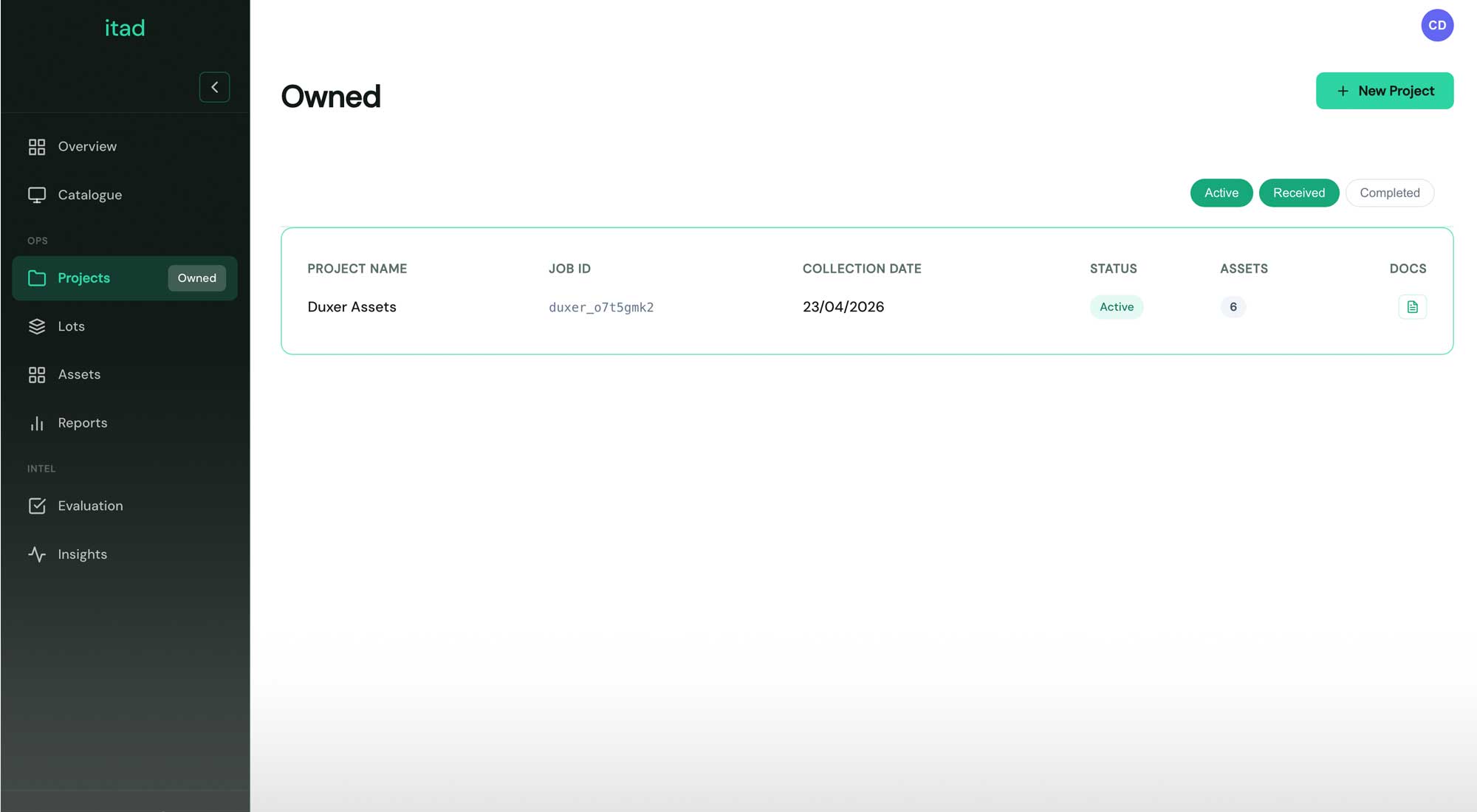
Every item logged against the job it came from.
Build a manifest around a real collection, not a flat spreadsheet. Every item gets identity, condition, and photos, plus whatever paperwork the situation needs, like a Waste Transfer Note or a DEFRA submission when disposal is involved.
- Collection details captured once, reused everywhere
- Photos and condition notes attached per item
- Auto-numbered transfer documents where compliance requires them
- Status tracked from collection through to final outcome
Built for the room, not the office.
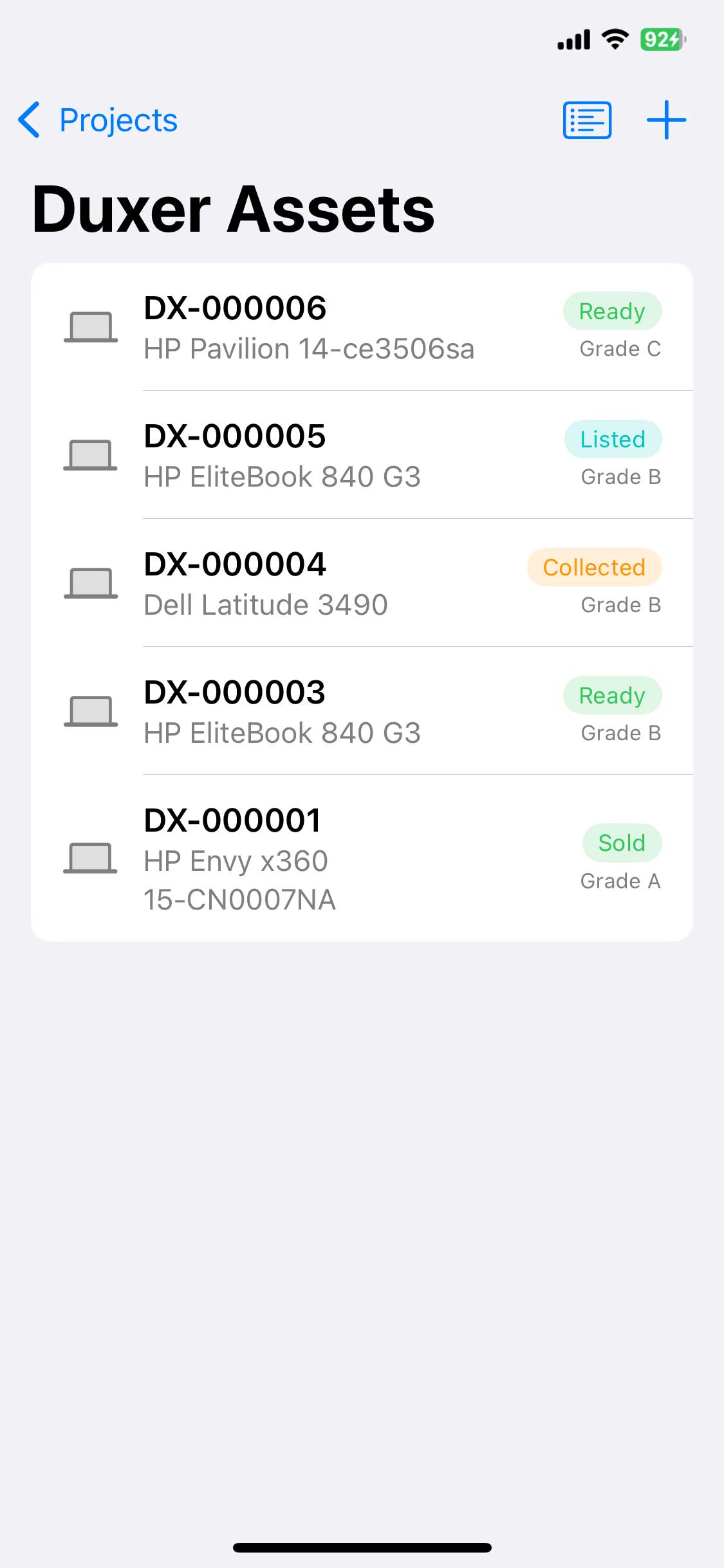
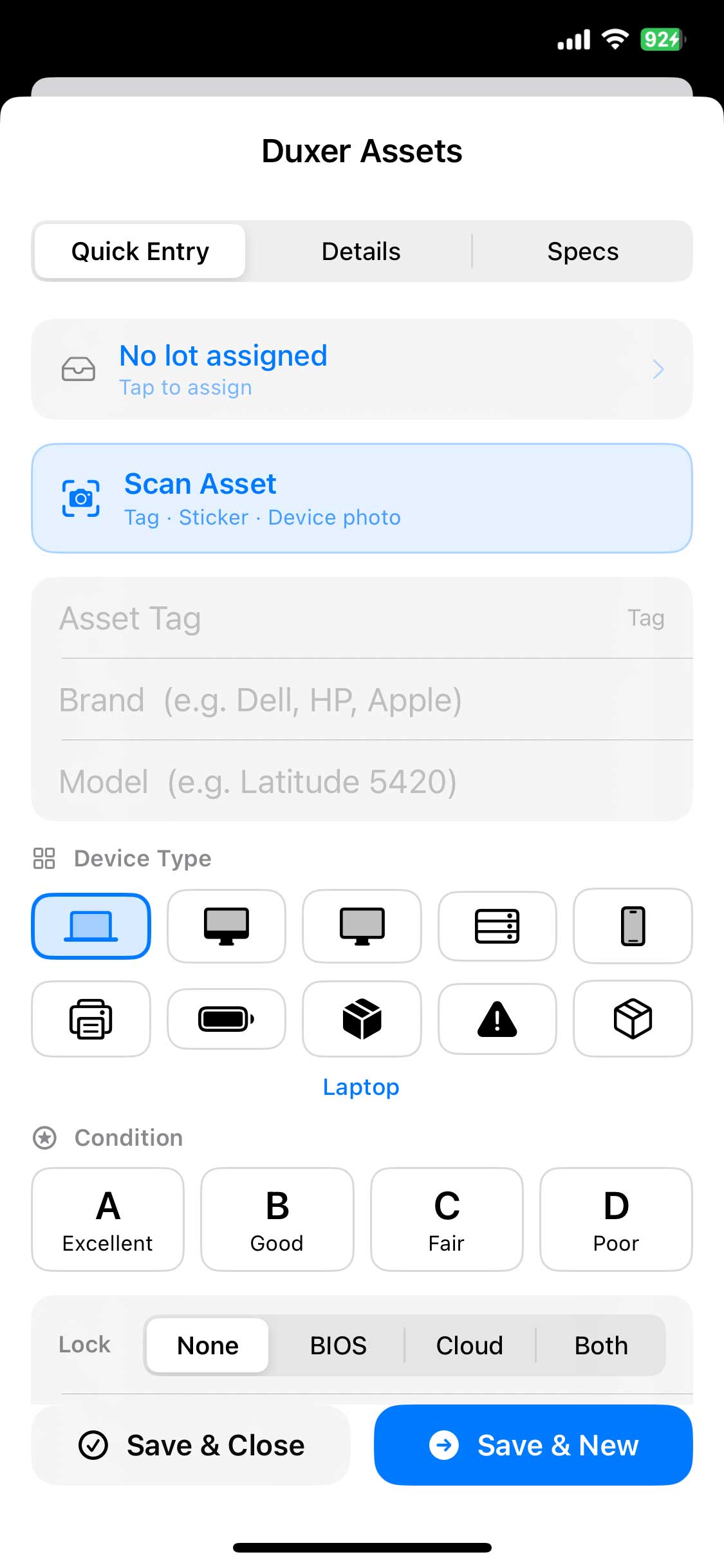
Most of this work doesn't start at a desk. Our iOS app captures serials, barcodes, and condition photos on-site, offline-tolerant, so a basement or a loading bay isn't a blocker.
- Native iOS, built for one-hand scanning
- Condition photos attach to the item automatically
- Offline-tolerant, keeps working without signal
- Syncs the moment connectivity returns

Value and carbon, not a back-of-envelope guess.
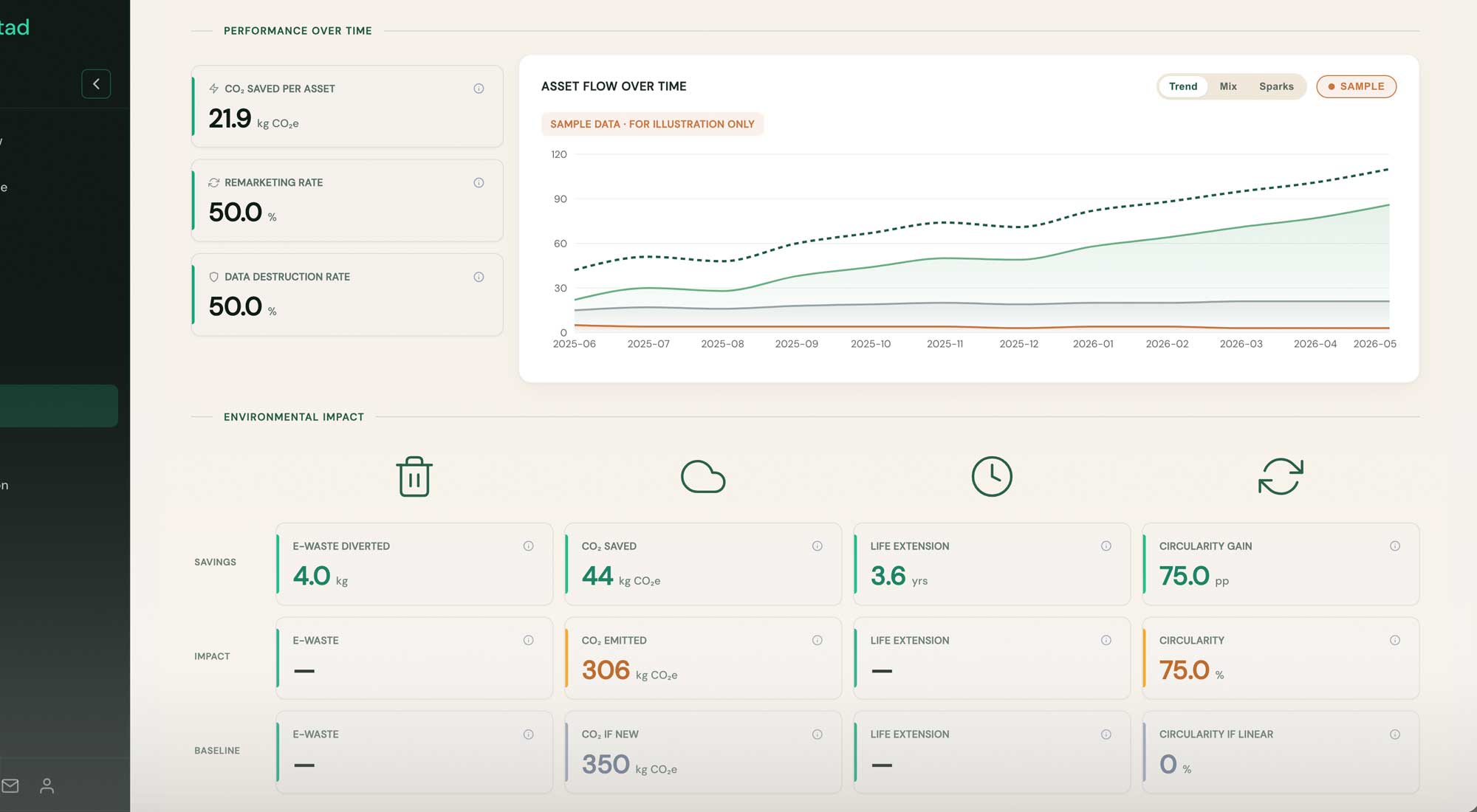
Every report is built from a component-level model, battery, RAM, storage, screen, board, rather than a single multiplier per device. You get a defensible figure, not an estimate that falls apart under a second look.
- Component-level carbon model, not a flat multiplier
- Value recovered shown alongside carbon avoided
- Per-item outcome: resold, donated, or recycled
- Exportable, ready to hand to whoever asked
Want to see it against your own numbers?
Tell us what you're dealing with and we'll walk you through it.